
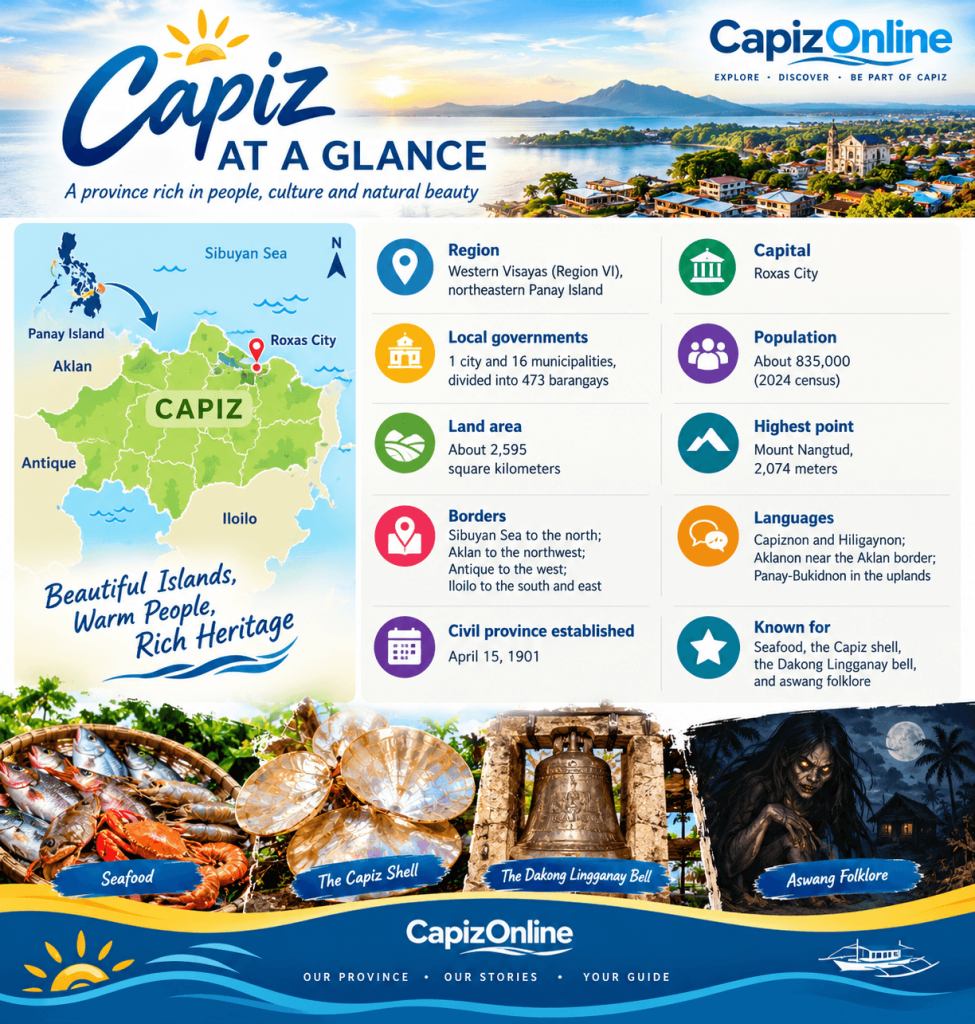
Capiz is a province on the northeastern tip of Panay Island in the Philippines, known as the Seafood Capital of the Philippines, home to the largest church bell in Asia, and carrying one of the country’s most famous folklore reputations. This page is the starting point for everything on Capiz Online: the province’s history, its geography and people, and where to go deeper on food, folklore, travel, and trip planning.
Capiz at a Glance
| Fact | Detail |
|---|---|
| Region | Western Visayas (Region VI), northeastern Panay Island |
| Capital | Roxas City |
| Local governments | 1 city and 16 municipalities, divided into 473 barangays |
| Population | About 835,000 (2024 census) |
| Land area | About 2,595 square kilometers |
| Highest point | Mount Nangtud, 2,074 meters |
| Borders | Sibuyan Sea to the north; Aklan to the northwest; Antique to the west; Iloilo to the south and east |
| Languages | Capiznon and Hiligaynon; Aklanon near the Aklan border; Panay-Bukidnon in the uplands |
| Civil province established | April 15, 1901 |
| Known for | Seafood, the Capiz shell, the Dakong Lingganay bell, and aswang folklore |
Geography and Setting
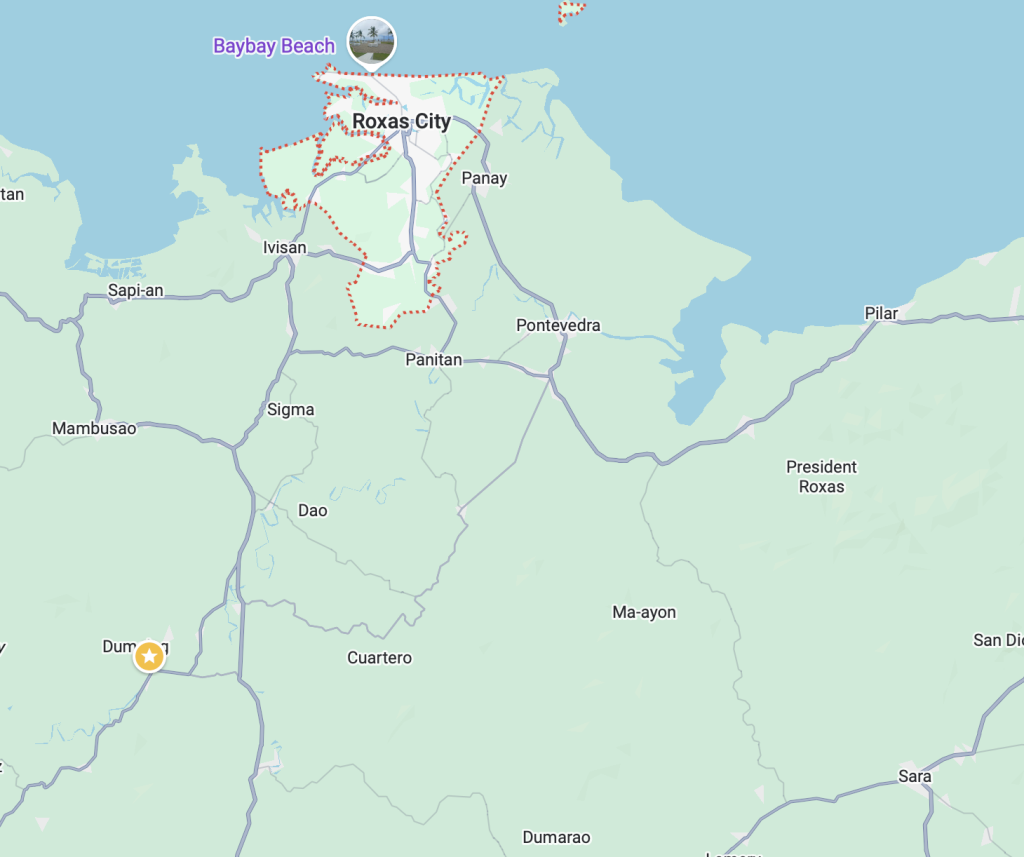
Located at the northeastern tip of Panay Island, Capiz is bounded by the Sibuyan Sea to the north, Aklan to the northwest, Antique to the west, and Iloilo to the south and southeast.
1. Coastal Landscapes & Aquaculture
The province’s geography is heavily dictated by its extensive coastline, mangrove estuaries, and major river systems like the Panay River. These natural waterways create ideal conditions for coastal fisheries, wild shellfish habitats, and expansive brackish fishponds that drive the local marine economy.
2. Mountainous Hinterlands & Cultural Heritage
Moving inland, the terrain ascends into the rugged Central Panay Mountain Range.
- Mount Nangtud: Standing at 2,074 meters above sea level along the western border, Mount Nangtud is the highest peak in Capiz (and the second-highest on Panay Island).TripBucket
- Indigenous Heritage: These interior highlands are the ancestral home of the Panay-Bukidnon indigenous community, custodians of rich oral traditions, intricate Panubok embroidery, and unique cultural heritage.
3. Roxas City: The Hub & Baybay Beach
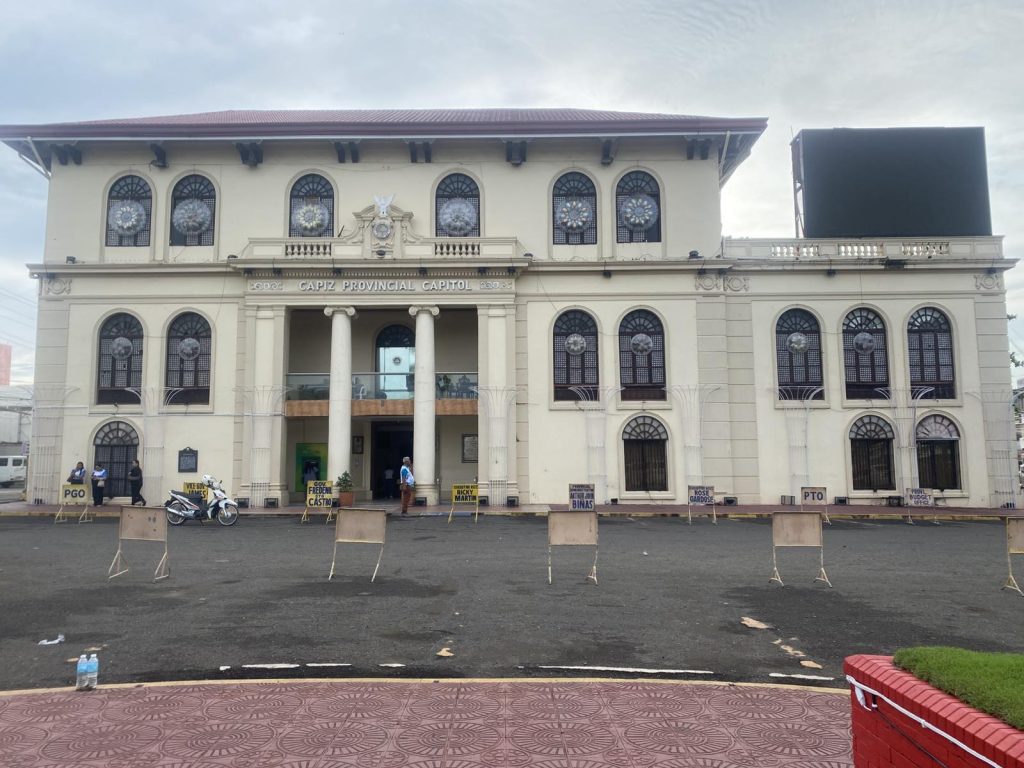
Roxas City, the provincial capital, sits strategically along the coast, serving as Capiz’s principal center for trade, governance, transport, and education.
- Transit Access: The city acts as the primary gateway for travelers, accessible via direct commercial flights through Roxas Airport (RXS) or maritime vessels calling at Culasi Port.
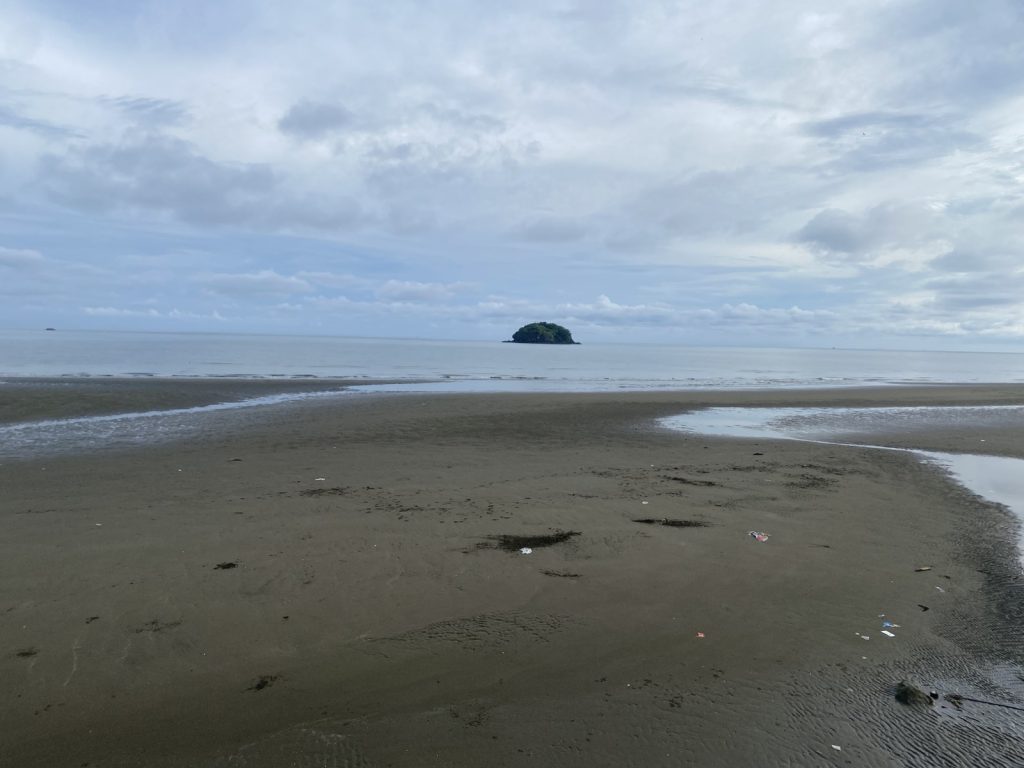
- Baybay Beach: Located just minutes from the city center, Baybay Beach is one of Roxas City’s premier attractions. Famous for its 3-kilometer stretch of dark grey sand, gentle waves, and lively beachfront seafood restaurants, it is a favorite gathering spot for both locals and visitors.
Roxas City also sits as the hub for land transportation with bus and passenger van terminals are located in the Roxas City Integrated Transport Terminal at Pueblo de Panay.
The History of Capiz
Before the Spanish
Folk history recorded in the Maragtas, written down by Pedro Monteclaro in 1907, tells of ten Bornean datus who settled Panay around the 13th century and bought the island from the Ati people. In that tradition, Capiz and Aklan were once one community, ruled by the descendants of Datu Bankaya until the Spaniards arrived. Historians treat the Maragtas as a blend of oral tradition and later writing, not a verified record, but it remains central to how Panay people understand their origins.
A myth worth correcting: many older sources on Panay history cite the “Code of Kalantiaw” as an ancient law code from the island. It isn’t real. Historian William Henry Scott showed in the late 1960s that it was a 20th-century forgery created by Jose E. Marco in 1913, and it was officially declared a hoax in 2004. If you see it presented as fact, the source is out of date.
The Spanish Period
Spanish settlement in the area dates to 1566. In 1569, Miguel López de Legazpi came to Panay from Cebu and found people with tattoos, which is why the Spaniards called the island Isla de los Pintados. Captain Diego de Artieda, sent by Legazpi, landed at the town of Panay and proclaimed it the capital. The Spaniards later moved the capital to the town of Capiz, now Roxas City, which sat near the sea and offered docking facilities.
By the early 1700s, Panay had been divided into three provinces: Iloilo, Antique, and Capiz, which at that time included Aklan. Romblon was also administered under Capiz at one point.
Where the Name “Capiz” Comes From
The name Capiz has two prominent etymological explanations—one rooted in historical linguistics and commerce, and the other in colorful local folklore:
1. The Historical Origin: The Capiz Shell (Placuna placenta)
The most well-documented explanation links the province directly to its most famous natural resource: the capiz shell(Placuna placenta).
- Linguistic Evidence: Early lexicography supports this connection; notably, an 1860 Tagalog dictionary explicitly records the word “capiz” as meaning “window” or referring to the translucent shells used in colonial architectural windows.
- Economic & Cultural Legacy: Because these durable, translucent bivalve shells were harvested abundantly along the Panay coastline, the surrounding region naturally became synonymous with the shell itself.
2. The Folkloric Legend: Kapid (The Twins)
Local oral history offers a popular alternative tale:
- According to folklore, early Spanish settlers arrived in the region and met a local chieftain who had newborn twin children.
- When asked for the name of the place, the chieftain misheard the question and responded with the native word for twins—“Kapid” or “Kapiz”—which the Spaniards recorded as the name of the province.
While the twin story remains a cherished piece of local folklore, historical documents and linguistic records strongly support the capiz shell as the true origin of the province’s name.
The American Era, World War II, and Guerrilla Liberation
Capiz’s civil government was established on April 15, 1901, the date the province still celebrates each year at Capiztahan. Japanese forces landed in Capiz on April 16, 1942 and occupied the province. On December 20, 1944, Capiznon guerrillas, who already controlled most of the province, liberated the capital, leading to the full liberation of Capiz.
1. Establishment of Civil Government (1901)
The modern administrative structure of Capiz was established on April 15, 1901, when the United States Philippine Commission enacted Act No. 115. This formally instituted a civil provincial government, transitioning Capiz from centuries of Spanish rule. Today, Capiznons commemorate this historic milestone every April during the annual CAPIZtahan festival.
2. World War II & Japanese Invasion (1942)
During the onset of World War II in the Pacific, Imperial Japanese forces landed in Capiz on April 16, 1942. Over the next two years, the occupation severely disrupted local commerce, though much of the local population retreated into the interior and mountainous regions to resist Japanese control.
3. The Resistance and Early Liberation (1944)
Unlike many parts of the Philippines that relied heavily on direct American troop invasion for liberation, Capiz’s freedom was primarily won by its own people:
- The 6th Military District: Local Capiznon resistance fighters joined Colonel Macario Peralta Jr.’s famed Free Panay Guerrilla Movement (6th Military District), establishing one of the most effective clandestine networks in the archipelago.
- The Liberation of the Capital: By late 1944, local guerrillas controlled nearly all rural municipalities in the province. On December 20, 1944, guerrilla forces staged a decisive assault that liberated the capital town of Capiz (now Roxas City)—months before Allied division forces landed on Panay Island in March 1945.
Cityhood and Aklan’s Separation
In 1951, the town of Capiz became a chartered city under Republic Act 603 and was renamed Roxas City in honor of Manuel Roxas, a native son who became the fourth President of the Philippines and the first of the Third Republic. Five years later, on April 25, 1956, President Ramon Magsaysay signed Republic Act 1414, separating Aklan from Capiz as its own province.
People, Language, and Culture
Capiznon and Hiligaynon. The people of Capiz are Capiznon, and the language is also called Capiznon, a Visayan language closely related to Hiligaynon, which is widely understood across the province. In municipalities near the Aklan border, including Sapian, Jamindan, and Mambusao, Aklanon is commonly spoken as well.
The Panay-Bukidnon. In the uplands of Tapaz and Jamindan live the Panay-Bukidnon, also called Tumandok or Sulodnon. They maintain their own language, the sugidanon oral epic chanting tradition, and the panubok embroidery style. Parts of that heritage are considered endangered and are the subject of ongoing preservation efforts.
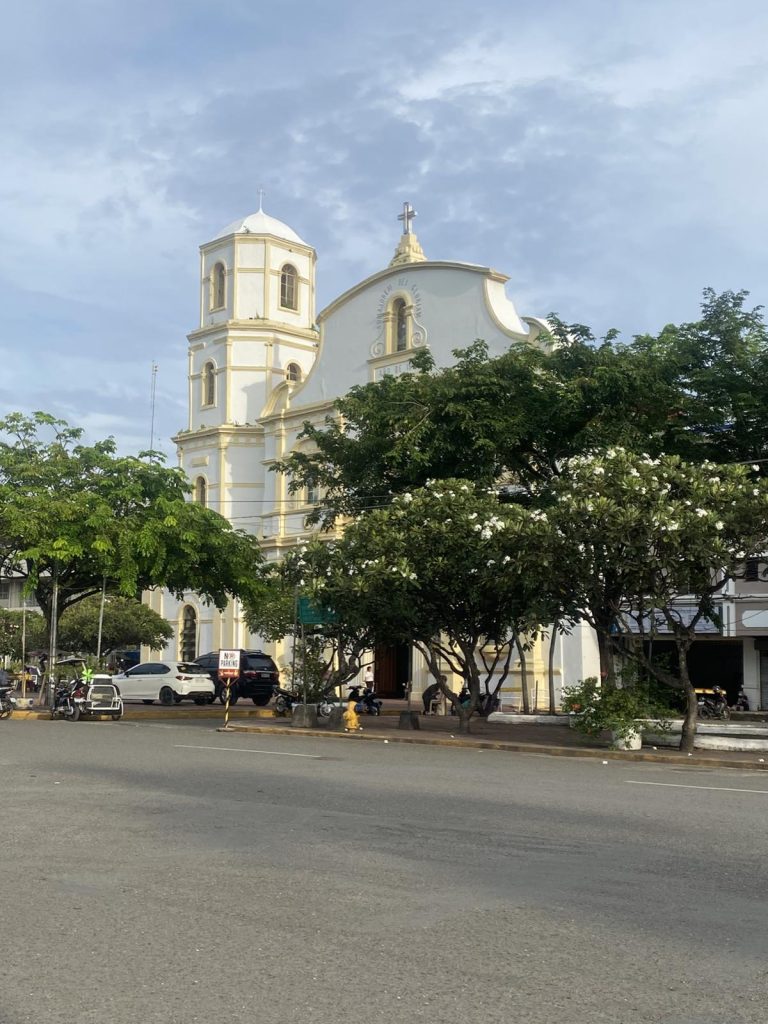
Faith and heritage. Catholic heritage runs through the province, from Sta. Monica Church in Panay town, home of the Dakong Lingganay, to the Immaculate Conception Metropolitan Cathedral in Roxas City, seat of the Archdiocese of Capiz.
Festivals. The province’s largest celebration is Capiztahan, held in mid-April to mark its founding anniversary and the memory of Manuel Roxas, and recognized as the best cultural festival in the provincial category at the 2025 Pearl Awards. Roxas City holds its own festival, Sinadya sa Halaran, each early December in honor of the Immaculate Conception. Individual towns have their own too, such as the Pangahaw Festival in Jamindan, tied to the January harvest, and the Padagyaw Festival in Dumarao.
The Economy of Capiz
Roxas City serves as the economic, educational, and logistics hub of Capiz, driving a provincial economy deeply rooted in marine resources and agriculture.
1. Seafood & Aquaculture: The Economic Backbone
Capiz’s extensive coastline shapes both its livelihood and identity. Capture fishing, shellfish harvesting, and aquaculture power local commerce across the province:
- Marine Resources: The coastal waters around Roxas City and Panay are famed for oyster beds and rare diwal(angel wing clams).
- Inland Aquaculture: Towns like Sapian host expansive brackish fishponds dedicated to raising high-grade milkfish (bangus), prawns, and crabs.
- National Recognition: This rich coastal yield earned Roxas City its national title as the “Seafood Capital of the Philippines.”
2. Agriculture
Inland, vast agricultural lands form the second pillar of the local economy. Rice is the province’s primary staple crop, supported by the production of corn, coconut, sugarcane, and high-value fruits.
3. Business, IT-BPO, and Commercial Hubs
Capiz’s commercial landscape is rapidly expanding through modern infrastructure, IT-BPM investments, and retail developments:
Retail Infrastructure: Modern retail thrives with major shopping centers, including SM City Roxas, Robinsons Place Roxas, Gaisano Grand Mall, and community malls like CityMall Arnaldo Boulevard alongside bustling commercial centers down Roxas Avenue.
Pueblo de Panay Township: Located in the heart of Roxas City, this 670-hectare master-planned community is the largest multi-use township development in the Visayas. It functions as a “city within a city,” housing IT-BPO facilities, automotive dealerships, government centers, residential areas, and dining hubs.Wikipedia
BPO Industry: Major global contact centers—such as ePerformax—employ thousands of local professionals handling international and domestic client accounts.
Food, Folklore, and Places: Where to Go Deeper
Food and seafood. Capiz’s food identity centers on diwal (angel wing clams), talaba (oysters), alimango (mud crab), and a range of native delicacies. Start with the Capiz Food Guide, then read about diwal and the Capiz shell for the deeper stories behind two of the province’s most distinctive products.
Folklore. Capiz is the province most associated with aswang and manananggal legends in Filipino culture. The real history is more layered than the stereotype. Read The Aswang of Capiz for the full story, and the Manananggal article for the creature itself.
Places. Baybay Beach, Olotayan Island, Sta. Monica Church, and the heritage sites around Roxas City are covered in the Capiz Province, Philippines Travel Guide, with deeper dives on individual places. For the towns beyond the capital, see the guide to the Municipalities of Capiz.
Planning a trip. How to Get to Capiz from Manila covers flights, ferries, and bus routes, and the Capiztahan guide covers the biggest event of the year.
Map of Capiz
Is Capiz Safe for Tourists?
Capiz is considered one of the safest travel destinations in Western Visayas. Tourists, solo travelers, and families regularly visit Roxas City and nearby towns without safety issues.
- Low Crime Rate: Local police data and tourist reports consistently rank Capiz among the most peaceful provinces in the region.
- Warm Hospitality: Local Capiznons are widely known for their friendliness, warmth, and high standard of hospitality toward visitors.
- Safe Nightlife & Dining: Popular tourist spots like Baybay Beach and Roxas City Plaza are well-lit and safe to walk around during the evening.
Frequently Asked Questions
Capiz is a province in the Western Visayas region of the Philippines, on the northeastern tip of Panay Island, facing the Sibuyan Sea. Its capital is Roxas City.
Capiz is known as the Seafood Capital of the Philippines, for the translucent Capiz shell that gave the province its name, for the Dakong Lingganay, the largest Catholic church bell in Asia, and for its long association with aswang folklore.
Capiz has 16 municipalities and 1 component city, Roxas City, divided into 473 barangays.
Aklan was separated from Capiz on April 25, 1956, when President Ramon Magsaysay signed Republic Act 1414. Before that, the two were a single province.
The city was formerly the town of Capiz. It was renamed in 1951 in honor of Manuel Roxas, a native of the province who became the first President of the Third Republic of the Philippines.
Most people speak Capiznon, a Visayan language closely related to Hiligaynon, and Hiligaynon is widely understood. Aklanon is also spoken in border towns, and the Panay-Bukidnon in the uplands have their own language.
Yes, Capiz is completely safe to visit. Capiz is known as one of the most peaceful and hospitable provinces in the Philippines with a low crime rate. The infamous “aswang” myth is purely local folklore and legendary storytelling—not a real-life threat.
No, the Code of Kalantiaw is not real. While long believed to be an ancient pre-colonial penal code from Panay, historical research has proven it was a fabrication created in the early 1900s. The National Historical Commission of the Philippines officially delisted it as a genuine historical artifact in 2004.
Explore by topic: Capiz Province, Philippines: Complete Travel Guide | Capiz Food Guide: What to Eat in the Seafood Capital | The Aswang of Capiz | How to Get to Capiz from Manila