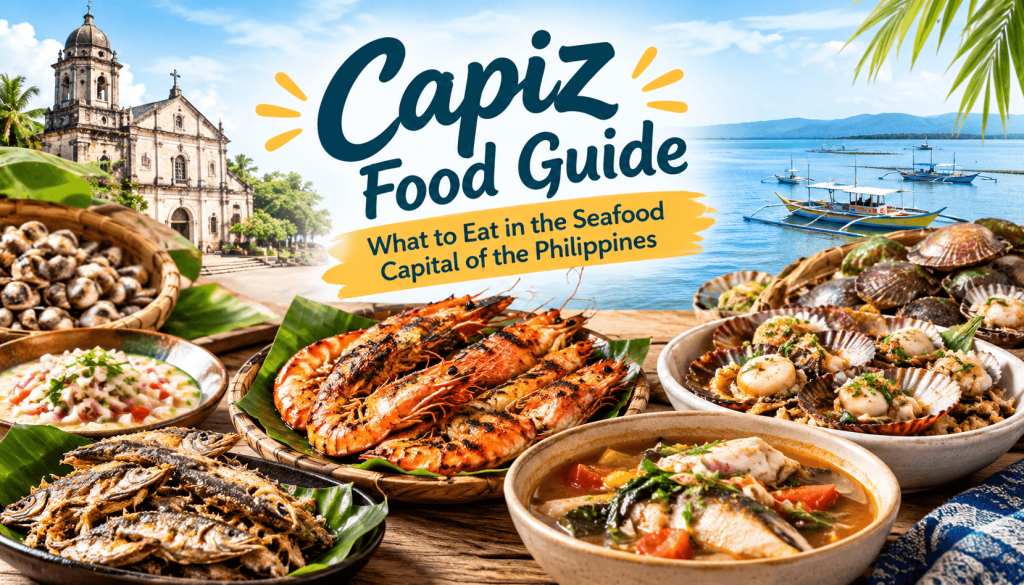
Roxas City and Capiz province didn’t earn the title “Seafood Capital of the Philippines” from a tourism brochure — it earned it from one of the most bountiful fishing grounds in the country, decades of oyster and shellfish farming, and a food culture that treats fresh seafood as an everyday meal, not a special occasion. This guide covers what to actually order, what makes it different, and the native delicacies most visitors never hear about.

Quick Facts
- Nickname: Seafood Capital of the Philippines (Roxas City, Capiz’s capital)
- Signature seafood: diwal (angel wing clams), talaba (oysters), alimango (mud crab)
- Best way to eat most of it: simply — steamed, grilled, or with a vinegar-soy-calamansi dipping sauce
- Where the seafood comes from: floating fish farms, oyster beds, and fishponds along the coast, some feeding directly into Manila’s top restaurants
Diwal: The Angel Wing Clam
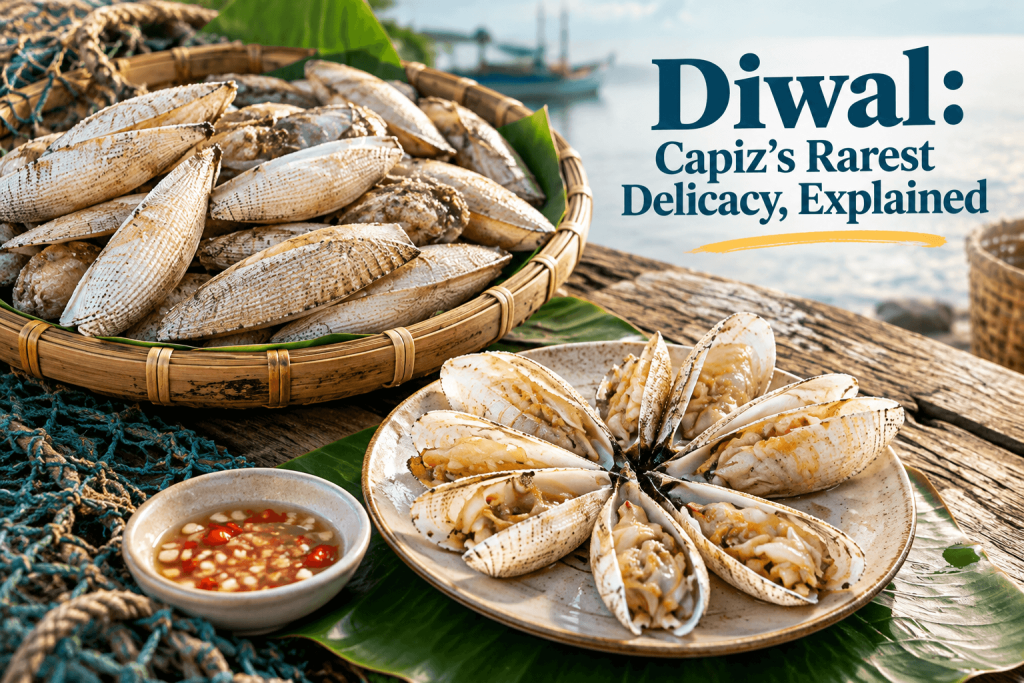
If Capiz has one food flex, it’s diwal — angel wing clams, also called “angel wings” for the pale, wing-shaped halves of their shell. Capiz is considered the primary sanctuary for this delicacy in the Philippines, though it can be found in a few other places. Diwal is seasonal, so catching it fresh is genuinely something to plan around rather than assume you’ll find any day of the year.
It’s best eaten simply — steamed with lemongrass or baked with garlic and butter — specifically so the clam’s natural flavor isn’t buried under heavy sauce. If you see it on a menu during your visit, order it before deciding on anything else; it’s the one dish locals will tell you not to skip.
Talaba (Oysters) and Scallops
Unlike the small, expensive oyster platters you’d find in a high-end city restaurant, Roxas City sells oysters by the sack or bucket, and at prices that make it easy to over-order. They’re typically served steamed for freshness and safety, alongside a dipping sauce of vinegar, soy sauce, and calamansi (Philippine lime) — occasionally with sinamak, a spiced local vinegar, as an alternative. Scallops are just as abundant and usually prepared buttered or grilled.
Alimango: Mud Crab
Locally called alimango, Capiz’s mud crabs are prized for firm meat and rich aligue (crab fat/roe). If you’re a crab person, this is the province’s version of a must-try, typically served steamed, grilled, or in a garlic butter preparation.
Other Seafood Worth Ordering
- Bisugo (threadfin bream) — usually grilled, sold by the piece
- Bakasi (eel) — grilled, a common feature on set seafood platters
- Lapu-lapu (grouper) and abalone — farmed in floating cages along the coast, often destined for Manila’s restaurant supply chain before ever reaching a menu — worth trying locally instead of paying city prices later
- Pasayan (shrimp) — grilled or in soups, a standard addition to any seafood spread
Where to Eat It
Baybay Beach in Roxas City is the easiest starting point — a stretch of beachfront stalls and restaurants serving fresh catch, often with the option to pick your seafood and have it cooked to order. Prices and specific spots change over time, so rather than lock in a specific restaurant recommendation here, treat Baybay as your general destination and ask locally for whichever stall is freshest that day — this is a place where recent local knowledge beats an old blog post every time.
Native Delicacies and Local Dishes (Beyond Seafood)
Capiz’s food identity isn’t only seafood. Local dishes and delicacies worth knowing:
Savory:
- Inubaran nga manok — a native chicken dish
- Chicken binakol — chicken cooked in coconut water, often inside a bamboo or coconut shell
- Nilagpang — a grilled-and-mixed dish typically made with fish or meat, seasoned with chili and vinegar
Sweet:
- Buko pie — young coconut pie, a popular pasalubong (take-home gift) item
- Bitso-bitso — a fried, sugar-coated dough snack
- Ibos and suman — sticky rice desserts wrapped in leaves, boiled
- Puto — steamed rice cake
- Bayi-bayi — a native rice-based sweet
- Inday-inday — a chewy, toasted ground rice delicacy made with coconut and sugar, singled out by food travelers as a standout dessert
- Turon — fried banana spring rolls, common across the Philippines but a staple here too
A Practical Note on Freshness and Seasonality
Diwal specifically is seasonal — don’t build an entire trip itinerary around guaranteeing you’ll get it on a specific date. If it matters to you, ask locally or check with your accommodation ahead of time whether it’s currently in season. Everything else on this list — talaba, alimango, scallops — is generally available year-round given the scale of local farming.
Frequently Asked Questions
Capiz, especially Roxas City, is known as the “Seafood Capital of the Philippines,” famous for diwal (angel wing clams), talaba (oysters), and alimango (mud crab), along with native delicacies like inday-inday and buko pie.
Diwal, or angel wing clams, is a seasonal shellfish delicacy considered a specialty of Capiz province. It’s typically prepared simply — steamed with lemongrass or baked with garlic and butter — to preserve its natural flavor.
Generally no. Oysters and scallops are commonly sold by the sack or bucket at prices well below what similar seafood costs in high-end city restaurants elsewhere in the Philippines.
Baybay Beach in Roxas City is the most accessible spot, with multiple stalls and restaurants serving fresh catch. Ask locally for the freshest option on the day you visit, since availability shifts.
Related reading: Capiz Province, Philippines: Complete Travel Guide | The Capiz Shell: The Real Story Behind the Province’s Name

As a versatile digital strategist, the author brings a wealth of technical and creative expertise to the table. He is a “Certified Content Marketing Specialist” with several years of experience navigating the complexities of “digital marketing” and “SEO” to drive meaningful engagement. Beyond the screen of analytics, he is deeply passionate about the intersection of form and function, maintaining an active practice in both **web design** and **web development** to build seamless, high-performing digital experiences.