Last updated: 2026 — diwal harvesting is subject to conservation regulations that change based on population recovery, so treat the availability information here as a starting point and confirm current status locally before planning a trip around it.
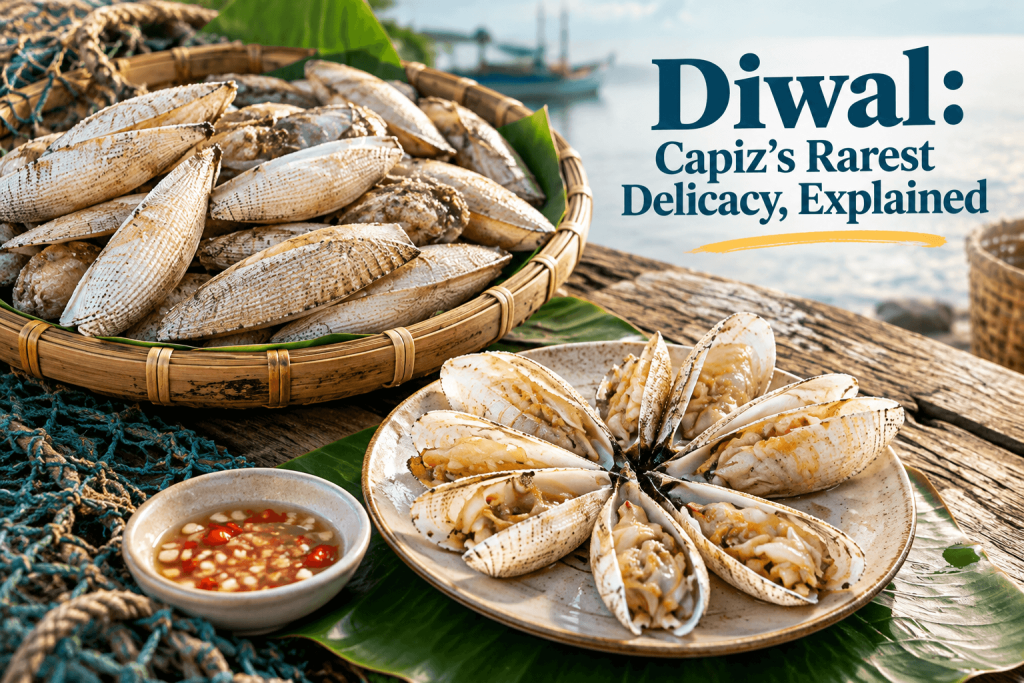
If Capiz has one dish that locals talk about with genuine reverence, it’s diwal. But here’s what most food articles don’t tell you clearly: this isn’t a “menu item you can always order” delicacy. It’s a heavily regulated, conservation-managed shellfish that’s been through boom-and-bust cycles of near-extinction and recovery for decades — and right now, whether you can eat it at all depends on the current harvest season.
Quick Facts
- Scientific name: Pholas orientalis, a species of angel wing clam
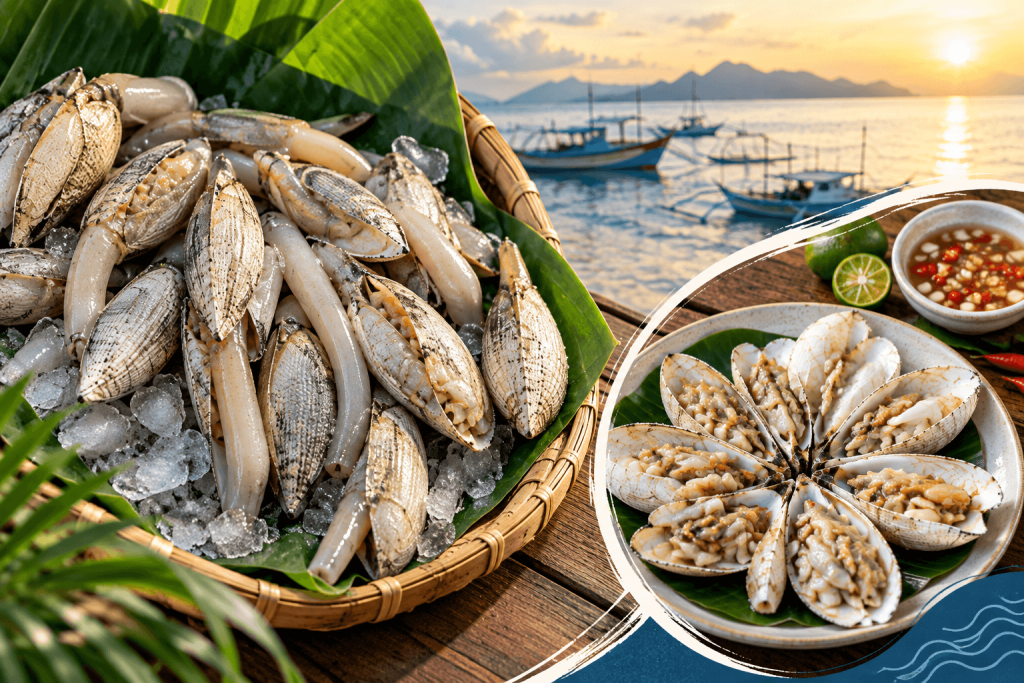
- Local name meaning: “diwal” comes from Hiligaynon, meaning roughly “sticking out the tongue” — a reference to the clam’s long, tongue-like siphon
- Where it’s found: muddy or clay-rich river-mouth habitats, primarily in Roxas City (Punta Cogon) and Pan-ay in Capiz, with additional populations in parts of Negros Occidental and Iloilo
- Harvesting in Capiz: historically done by authorized divers (the Roxas City Divers Association, ROCDA) during an open season generally running July to September, with a closed season from October to June to protect the population
- Current status (as of mid-2026): Panay municipality formally reopened its diwal harvest season via executive order in Barangay Agojo and Barangay Navitas, with published 2026 prices of ₱400 per kilo for personal consumption and ₱350 per kilo for bulk/business purchases (minimum 20 kilos). Harvest status is managed municipality by municipality and can open or close based on conservation assessments, so confirm current status for the specific area you’re visiting before your trip.
A Regulated, Actively Managed Fishery
Diwal harvesting in Capiz isn’t left to informal practice — it’s actively managed through official channels. Roxas City has maintained a dedicated Bantay Dagat and Diwal Task Force (reorganized as recently as Executive Order 9, Series 2025) specifically to patrol harvesting areas and enforce regulations. Harvest openings are announced through municipal executive orders, area by area, rather than following one single province-wide calendar — which is why you’ll see harvest news specific to individual barangays rather than a blanket “Capiz diwal season” announcement.
As of a May 2026 executive order, Panay municipality’s Barangay Agojo and Barangay Navitas grounds were formally reopened for harvest, with a “first come, first serve” or “reserve to order” purchasing system specifically designed to prevent a return to overfishing. This kind of area-specific, order-by-order management is the norm, not the exception — a ban in one barangay’s grounds doesn’t necessarily mean every diwal ground in the province is closed at the same time.
Why It’s So Rare
Diwal isn’t rare because it’s exotic or hard to find geographically — it’s rare because its population has repeatedly collapsed under harvesting pressure, forcing conservation bans. Capiz specifically enforced a total harvesting ban in the late 1990s after the population had nearly disappeared from overharvesting; when the ban lifted, Roxas City fishers reportedly harvested around 65 tons in a single following year, worth several million pesos to the local economy. A similar boom-and-bust pattern has played out since, with the most recent ban reportedly beginning within the last couple of years as the population declined again.
This is a genuinely fragile local resource, not simply a “seasonal specialty” in the way a fruit might be seasonal. When it’s available, it’s the result of active management and recovery efforts, not just calendar timing.
Don’t Confuse Capiz’s Rules With Negros Occidental’s
You’ll find some food and recipe sites describing diwal harvesting seasons running January through April — that’s accurate, but it’s specifically describing Valladolid, in Negros Occidental, a different province with its own separate diwal population and its own separate harvesting regulations. Don’t assume Capiz follows the same calendar; ask specifically about Roxas City or Pan-ay harvesting status when you’re there, not about diwal season in general.
What It Tastes Like and How It’s Prepared
Diwal has a sweet, tender, meaty texture that’s often compared favorably to oysters — several longtime fans of the dish rate it above more famous shellfish entirely. It’s typically prepared simply, to let the natural flavor lead:
- Grilled or steamed, often with garlic and local spices
- Baked with butter and garlic
- Tinolang diwal — a soup-style preparation
- Occasionally served with a spicy garlic butter treatment in more contemporary takes on the dish
Before cooking, diwal needs a thorough rinse and gentle scrub, since it’s harvested from muddy or silty ground and can carry grit if not cleaned properly.
Can You Actually Get It Right Now?
Given that harvest openings are managed area by area through executive orders rather than one fixed provincial calendar, the honest answer is: check current status for the specific area you’re visiting, rather than assuming a single yes-or-no answer applies to all of Capiz. If you’re planning a trip specifically hoping to try diwal:
- Ask your accommodation or a local restaurant directly whether diwal is currently in season and available in that area
- Don’t be surprised if it’s off the menu in one barangay’s grounds while available in another, since openings are managed locally rather than all at once
- If it’s available, expect a set price structure similar to what’s been published in recent harvest openings (roughly ₱350–400 per kilo, depending on whether you’re buying for personal consumption or in bulk)
- Treat it as the priority order of your trip if you find it available — this isn’t a “we’ll get to it eventually” dish
Frequently Asked Questions
Diwal, or angel wing clam (Pholas orientalis), is a rare, prized shellfish found in muddy river-mouth habitats in Capiz, along with parts of Negros Occidental and Iloilo, known for its sweet, tender meat.
Diwal comes from the Hiligaynon word meaning “sticking out the tongue,” referring to the clam’s long, tongue-like siphon.
Harvest openings are managed area by area through municipal executive orders rather than one fixed province-wide calendar. Roxas City has historically harvested generally July to September, with a closed season October to June, while Panay municipality’s Barangay Agojo and Navitas grounds were formally reopened via executive order in May 2026. Confirm current status for the specific area you’re visiting.
No — while diwal is found in Capiz, Negros Occidental, and Iloilo, each area has its own population and its own separate harvesting rules and seasons. A season described for one province, such as Negros Occidental’s Valladolid, doesn’t apply to Capiz.
Its population has repeatedly declined due to overharvesting, leading to periodic conservation bans. When available, it’s a managed, limited-harvest resource rather than a routinely available menu item.
Related reading: Capiz Food Guide: What to Eat in the Seafood Capital | The Capiz Shell: The Real Story Behind the Province’s Name

As a versatile digital strategist, the author brings a wealth of technical and creative expertise to the table. He is a “Certified Content Marketing Specialist” with several years of experience navigating the complexities of “digital marketing” and “SEO” to drive meaningful engagement. Beyond the screen of analytics, he is deeply passionate about the intersection of form and function, maintaining an active practice in both **web design** and **web development** to build seamless, high-performing digital experiences.