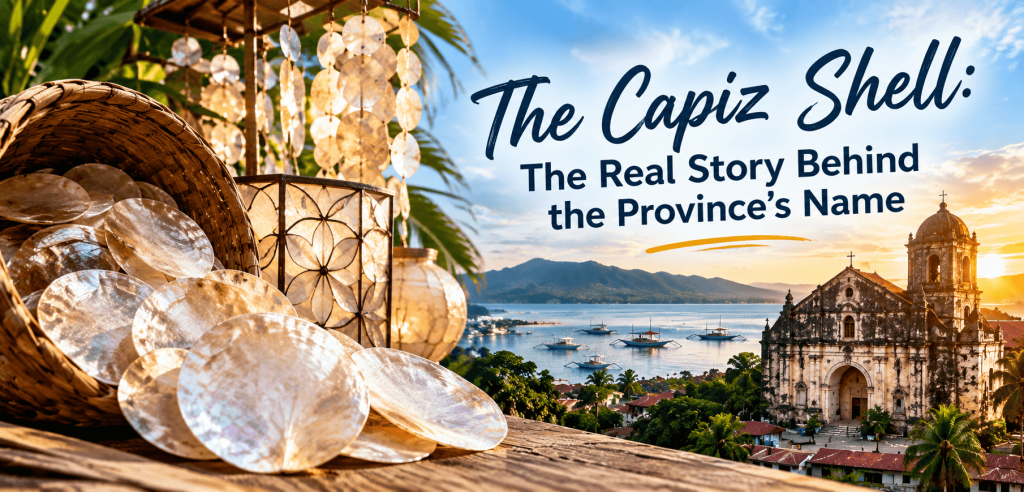
If you’ve ever seen the soft, pearly light coming through a traditional Filipino window made of small translucent squares, you’ve seen a Capiz shell window — and you’ve seen the reason this province carries the name it does. But the full story is more layered than “shiny shell, pretty windows,” and it includes a decline most travel articles conveniently leave out.
Quick Facts
- Scientific name: Placuna placenta, commonly called the windowpane oyster
- Local names: capiz, kapis, lampirong (Visayan)
- What it’s used for: traditional window panes, lampshades, trays, chandeliers, decorative handicrafts, and — less famously — as food
- Where it’s found: muddy or sandy coastal shores, bays, and lagoons across the Indo-Pacific, historically abundant in Panay Island waters
- Current status: significantly declined since the 1990s due to overharvesting and destructive fishing methods; conservation and restocking efforts are ongoing
Where the Name “Capiz” Actually Comes From
There are two competing origin stories, and it’s worth knowing both since you’ll hear the second one from locals constantly.
The documented version: The earliest known written reference to the word traces back to the 1860 edition of the Vocabolario de la lengua tagala, the first Tagalog dictionary, where the entry for “capiz” is defined as la Ventana — “the window.” This lines up directly with the shell’s historical use as a glass substitute in windows during the Spanish colonial period.
The folklore version: A popular local legend holds that the name came from a linguistic mix-up — when Spanish colonizers asked a local mother for the name of the place, she thought they were asking about her twin children (“kapid,” meaning twins), and the misunderstood word stuck. It’s a charming story and widely repeated, but it isn’t backed by the same documentary evidence as the “ventana” origin. Treat it as local folklore, not confirmed etymology — and feel free to enjoy it as a story either way.

From Windows to Handicrafts: A Short History
Before Spanish colonization, coastal communities in the region were already harvesting the windowpane oyster for food and using its shell for ornaments and trade. Once glass was scarce and expensive during the Spanish colonial period, the shell’s flat, thin, translucent quality made it a practical substitute — used extensively in the bahay na bato, the traditional Filipino stone-and-wood house style, and in church windows across the islands.
The shell’s popularity as a window material started declining in the 1920s through the 1940s, as American-era glass became more widely available and affordable. Rather than disappearing, though, the shell shifted into a second life: shellcraft. Trays, lampshades, chandeliers, decorative boxes, and ornaments made from capiz shell became — and still are — a recognizable category of Filipino handicraft, sold both domestically and internationally.
The Decline Most Tourist Guides Don’t Mention
Here’s the part that’s often left out of Capiz travel content: the fishery that made this shell famous has been in serious decline since the 1990s. Overharvesting and destructive fishing methods — trawling, dredging, and blast fishing among them — badly depleted natural capiz beds across the Philippines, including in Panay Gulf waters. A nationwide survey in the 1990s identified 27 natural capiz beds, many already declining or depleted.
The Philippine Fisheries Code of 1998 (Republic Act 8550) introduced permits, quotas, size limits, and gear restrictions to try to manage what was left, and destructive dredging rakes were banned in some areas. Conservation and restocking programs — including broodstock transplantation trials in Panay Gulf starting in 1999, and more recent hatchery and grow-out experiments in Iloilo and Guimaras — are actively working toward bringing the population back, though full recovery is still a work in progress.
Worth being upfront about: a meaningful share of the current capiz shell trade and shellcraft supply chain today runs through Oton, Iloilo, rather than Capiz province itself. The name “Capiz” has stuck nationally as the identity of the shell regardless of exactly where it’s currently harvested — similar to how “champagne” became a generic term far from its origin. If you’re visiting Capiz province expecting to see an active, thriving shell industry exactly like it was decades ago, temper that expectation; the story today is more about heritage and slow recovery than a booming trade.
It’s Also Food
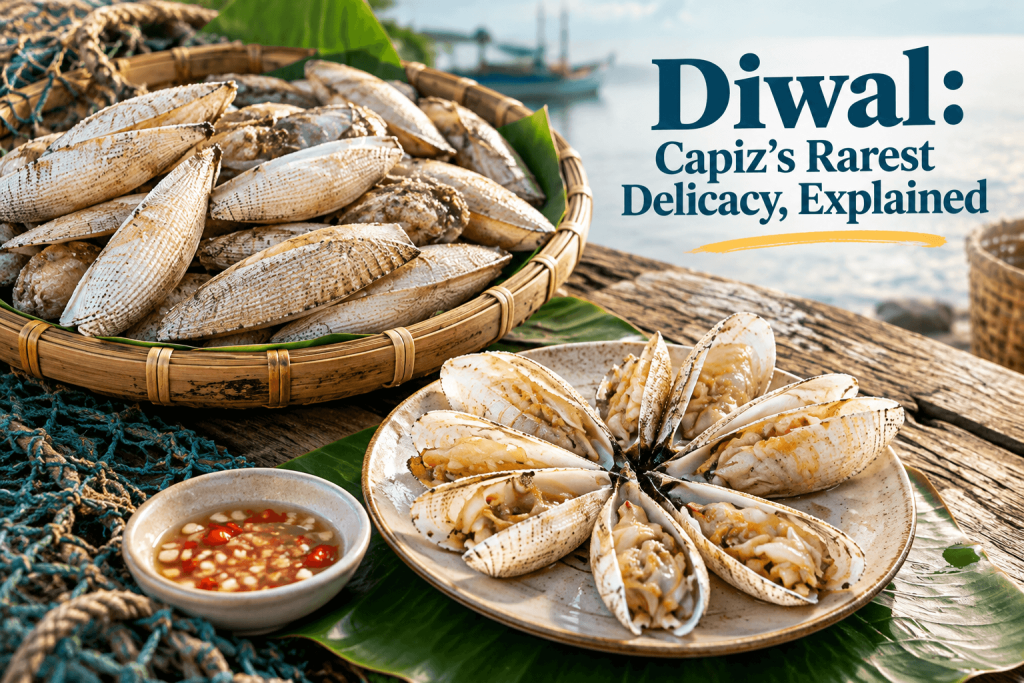
Less known outside fishing communities: the oyster’s meat (locally called unod), while historically treated as a low-value byproduct of the shell trade, is edible and nutritious, and is eaten fresh or fermented in some local markets. It hasn’t reached the fame of Capiz’s other seafood stars like diwal or talaba, but it’s part of the same coastal food culture.
Where to See and Buy Capiz Shell Products Today
Capiz shell handicrafts — lampshades, trays, wind chimes, decorative panels — are still produced and sold as souvenirs and home décor across the Philippines, not exclusively in Capiz province. If shellcraft specifically (not just the seafood side) is a priority for your trip, it’s worth checking directly with local shops or the provincial tourism office before you go, since production hubs have shifted over the decades.
Frequently Asked Questions
A Capiz shell is the shell of the windowpane oyster (Placuna placenta), a thin, flat, translucent mollusk shell historically used as a substitute for glass in Filipino windows and now mainly used in decorative handicrafts like lampshades and trays.
The most documented explanation traces the name to the word’s 1860 dictionary definition as “la Ventana” (window), tied to the shell’s historic use in windowpanes. A popular but undocumented local legend offers an alternate origin involving a mistranslation of the word “kapid” (twins).
The fishery has significantly declined since the 1990s due to overharvesting and destructive fishing methods. Some shellcraft and harvesting activity continues, but a notable share of today’s supply chain runs through Iloilo rather than Capiz province itself, alongside ongoing conservation and restocking efforts.
Yes — the oyster’s meat is edible and consumed locally, though it’s historically treated as a low-value byproduct compared to the shell itself, and it’s far less well-known than Capiz’s other seafood specialties like diwal or talaba.
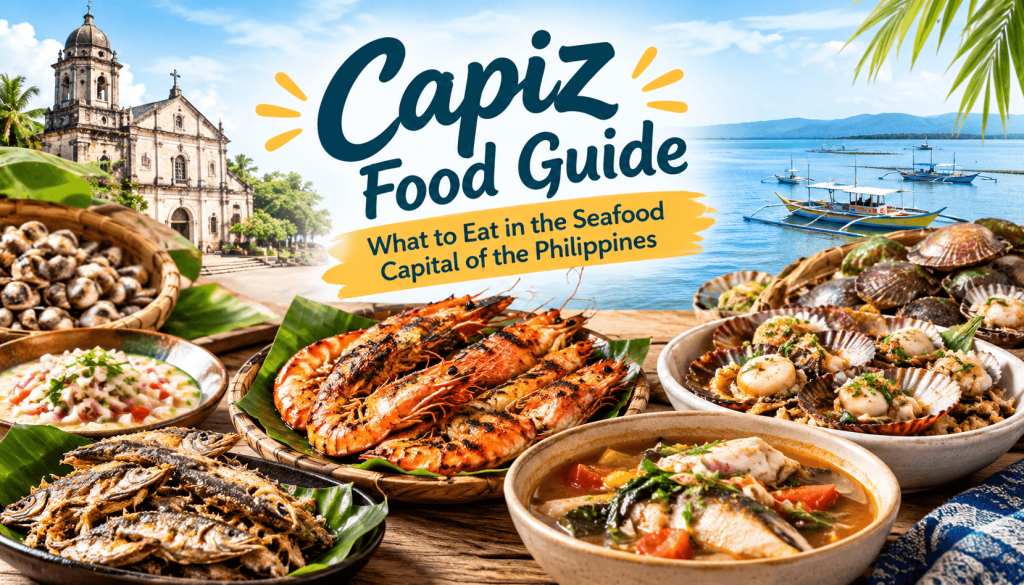
Related reading: Capiz Food Guide: What to Eat in the Seafood Capital | Capiz Province, Philippines: Complete Travel Guide

As a versatile digital strategist, the author brings a wealth of technical and creative expertise to the table. He is a “Certified Content Marketing Specialist” with several years of experience navigating the complexities of “digital marketing” and “SEO” to drive meaningful engagement. Beyond the screen of analytics, he is deeply passionate about the intersection of form and function, maintaining an active practice in both **web design** and **web development** to build seamless, high-performing digital experiences.